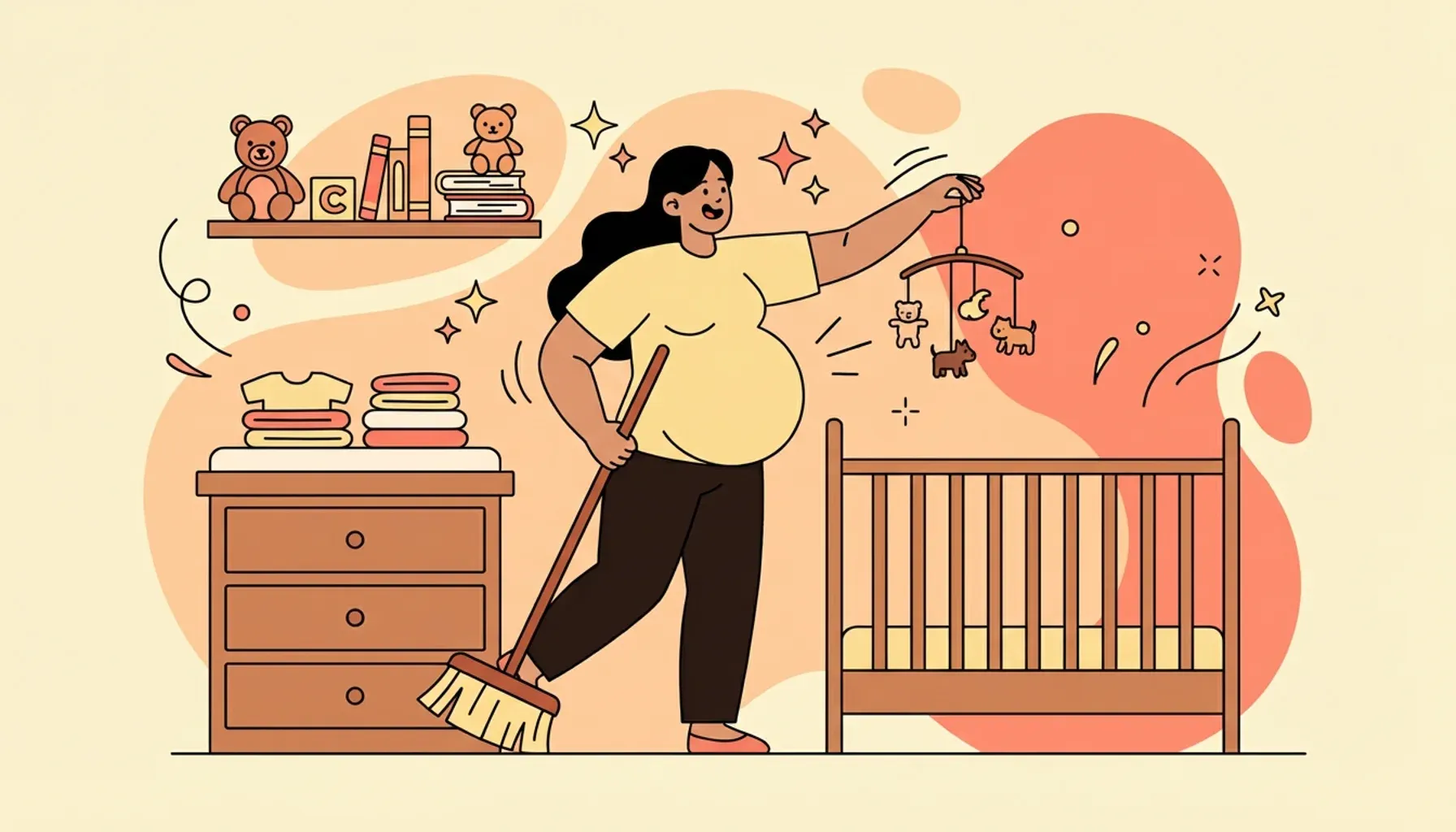

Nesting
Do you suddenly feel an overwhelming urge to mop the floor, organize closets, and reorder the shelves and drawers in the nursery?
During pregnancy, these urges can pop up even in women who don’t normally get excited about doing chores or keeping house. This is known as nesting. The soon-to-be mama feels an instinctive drive to prepare the home for the new baby. Hormones play a huge part in this very natural response [1].
Nesting might help lessen any anxiety you may be experiencing in anticipation of the baby’s arrival. Just make sure not to overwork yourself.
Physical overexertion may stretch the muscles of your lower abdomen, causing the uterus to contract or relax. This, along with other physical changes that prepare mother and baby for birth can cause false “contractions” (known as Braxton-Hicks) which occur solely in the uterus, unlike real contractions which happen when the cervix dilates for birth. These false contractions are natural and good for both your body and the baby, as they can strengthen the uterus before childbirth and develop the baby's sensitivity to external stimuli [2].
If your contractions last longer than 40 seconds and are less than five minutes apart, contact your doctor immediately [3].
You may be feeling a sort of heaviness in your pelvis, which is often associated with the relaxation of the pelvic ligaments and increased joint mobility, both caused by your hormones [2]. Breathing should feel easier because the uterus is now pressing less against your lungs. Your stomach also has less pressure on it, which may mean less heartburn.
If you are expecting twins
If the nesting instinct is strong, then a smart purchase in the last days of pregnancy is a mattress pad. First, it will save your bed if your water breaks at night. And then for a long time it will protect the paternal bed from anything the twins may produce!
Discharge
Vaginal discharge should be milky white and even, with no foul odor. Tell your doctor if you have a yellow-green, curdled, or foamy discharge, especially if it is accompanied by pain or itching. This usually indicates an infection [4].
At this time, you may secrete thick mucus the genital tract, which is normal at the end of the third trimester. During pregnancy, the cervix is blocked by a mucus plug that protects the baby from infection. As childbirth draws near, the cervix softens and opens slightly, and the plug moves down into the vagina. This is a normal process, but you should report it to your doctor [5].
Call your doctor immediately if you notice bloody discharge or symptoms of menstruation [3].